What Are Construction Documents?
What are construction documents? Construction documents are the detailed drawings and written specifications used to obtain permits and guide the safe, accurate construction of a building. In architecture, these documents translate design concepts into precise technical instructions that contractors, engineers, and municipalities rely on during construction.
Whether you're planning a custom home, an addition, or a commercial project in New Jersey, understanding construction documents can help prevent permit delays, budget surprises, and construction errors. They form the bridge between architectural design and the actual building process, ensuring that every structural, mechanical, and electrical component is clearly defined before work begins.
What Are Construction Documents in Architecture?
In architecture, construction documents (often abbreviated as CDs) are the comprehensive set of drawings and written specifications used to construct a building. They are the final stage of the architectural design process before construction begins.
Most building projects follow three primary design phases:
Schematic Design (SD) – This early stage explores concepts, layouts, and general building ideas.
Design Development (DD) – The design becomes more refined, with major building systems identified and preliminary engineering integrated.
Construction Documentation (CD) – The design is finalized and translated into detailed technical instructions for construction.
During the construction documentation phase, architects coordinate with structural engineers, mechanical engineers, electrical engineers, plumbing consultants, and sometimes landscape architects or civil engineers. Each discipline contributes drawings and specifications that describe their portion of the building.
Design Drawings vs Construction Documents
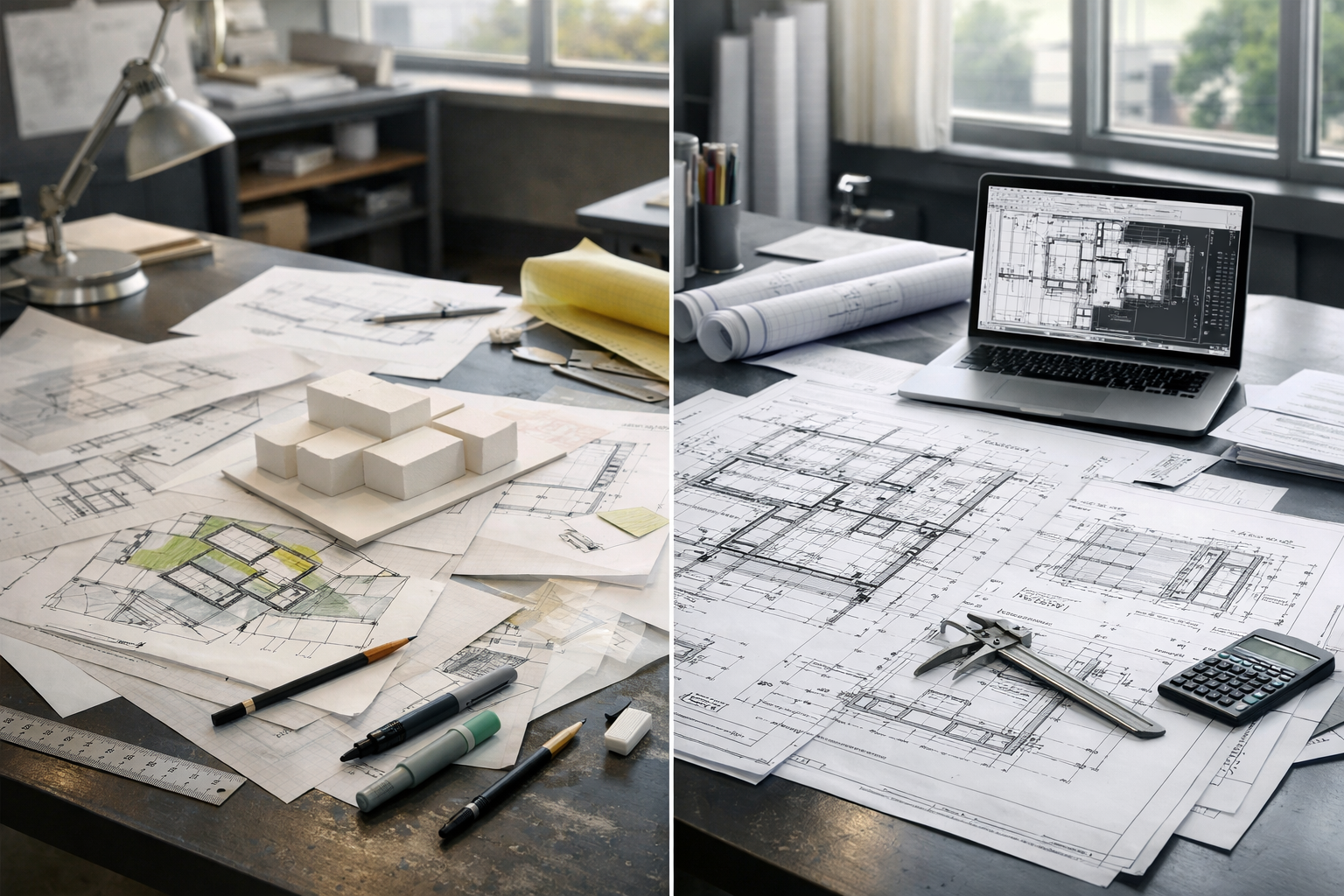
Design drawings and construction documents are often confused, but they serve very different purposes.
Design drawings typically:
Illustrate concepts and spatial ideas
Show general layouts or aesthetics
Lack the technical detail required for construction
Construction documents, on the other hand:
Provide exact dimensions and specifications
Define materials and installation methods
Coordinate structural, mechanical, electrical, and plumbing systems
In simple terms, design drawings explain the idea, while construction documents explain exactly how to build it.
Why Construction Documents Are Legally Binding
Construction documents frequently become part of the construction contract between the project owner and the contractor. Because of this, they carry legal weight.
They define critical project information such as:
Scope of work
Materials and product specifications
Performance requirements
Responsibilities of the contractor and design team
If disputes arise during construction, courts often refer back to the construction documents to determine what was originally specified.
Why Municipalities Require Construction Documents
Local governments require construction documents before issuing building permits because they allow inspectors and plan reviewers to verify that the project complies with building codes and safety regulations.
Permit reviewers typically use these drawings to evaluate:
Structural safety and load capacity
Fire safety requirements
Accessibility compliance
Zoning setbacks and height restrictions
Energy efficiency standards
Without approved construction documents, construction cannot legally begin.
What Is Included in Architectural Construction Documents?
Architectural construction documents combine drawings and specifications from multiple disciplines. The goal is to produce a coordinated package that clearly explains how the building should be constructed.
Architectural Drawings
Architectural drawings form the backbone of the construction document set. They describe the building layout, appearance, and interior organization.
Floor Plans
Floor plans are the drawings most people recognize. These overhead views show how spaces are organized and how rooms connect to each other.
Typical floor plans include information such as:
Room names and layouts
Wall locations and dimensions
Doors and window openings
Plumbing fixtures and appliances
Electrical outlets and switches
Floor plans also reference other drawings within the document set, such as sections and interior elevations.
Elevations
Elevations are flat views of the exterior sides of the building. They illustrate the building's height, exterior materials, and overall appearance.
Elevations usually identify:
Window and door heights
Exterior finishes such as siding or brick
Roof slopes and parapets
Finished floor elevations
These drawings help contractors understand how the building should look from the outside.
Sections
Sections are vertical cuts through the building that reveal the relationships between floors, walls, ceilings, and structural systems.
They typically show:
Floor-to-floor heights
Ceiling heights
Roof structures
Structural framing relationships
Sections allow builders to visualize how the building works in three dimensions.
Details
Detail drawings zoom in on specific construction conditions. These drawings clarify how building components connect and how materials are installed.
Common detail drawings include:
Window and door installation details
Roof-to-wall transitions
Exterior cladding attachments
Waterproofing assemblies
These drawings reduce construction errors by providing precise guidance.
Schedules
Schedules are tables listing detailed information about building components.
Common schedules include:
Door schedules
Window schedules
Finish schedules
Lighting fixture schedules
Schedules often include manufacturer information, product numbers, and material finishes so contractors know exactly what to install.
Structural Engineering Drawings
Structural drawings ensure that the building can safely support loads and withstand environmental conditions. These drawings are prepared by a licensed structural engineer.
Typical structural construction documents include:
Foundation plans, which show the layout and type of foundations supporting the building
Framing plans, which define beams, columns, and load-bearing walls
Beam and column sizing, which determines structural capacity
Structural notes and calculations, which explain engineering assumptions and design loads
Why Structural Documentation Matters in New Jersey
Structural engineering is especially important in New Jersey due to environmental conditions such as:
Snow loads from winter storms
Wind exposure near coastal areas
Structural upgrades required for older homes
Accurate structural documentation ensures that buildings remain safe under these conditions.
MEP and Consultant Drawings
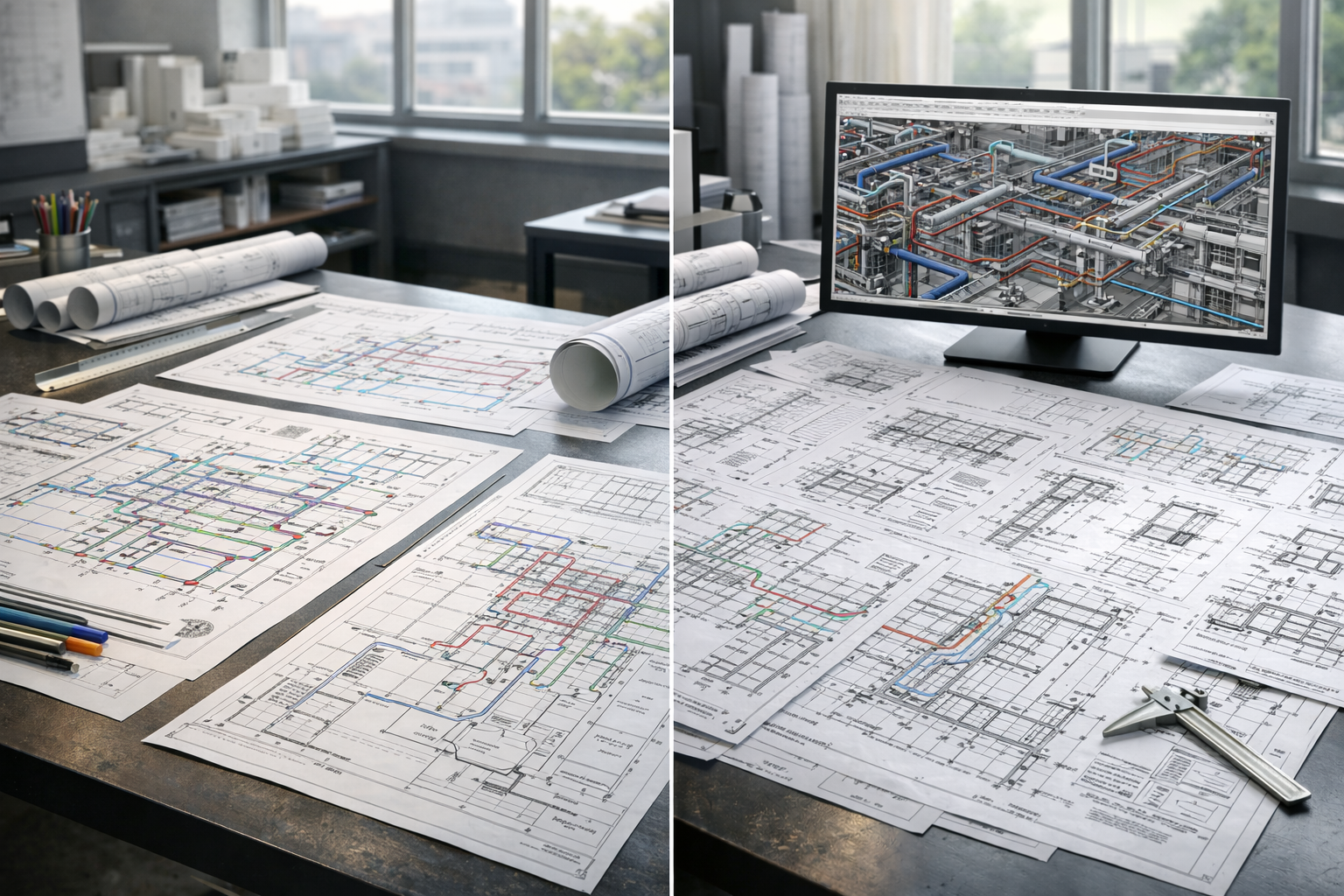
Most modern buildings rely on complex systems that must be carefully coordinated. These systems are documented through MEP drawings, which stand for Mechanical, Electrical, and Plumbing.
Mechanical Drawings
Mechanical drawings define heating, ventilation, and air conditioning systems. They often show:
HVAC equipment locations
Ductwork layouts
Ventilation systems
Thermostat placement
Electrical Drawings
Electrical drawings describe power distribution throughout the building.
These plans typically include:
Lighting layouts
Electrical panel locations
Outlet placements
Circuit diagrams
Plumbing Drawings
Plumbing drawings illustrate water supply and drainage systems.
They usually identify:
Water supply lines
Drainage pipes
Vent stacks
Plumbing fixtures
Fire Protection Drawings
For many commercial buildings, fire protection systems must also be documented. These drawings show sprinkler systems, alarms, and fire suppression equipment.
Fire protection systems must meet standards established by the National Fire Protection Association (NFPA).
Permit Set vs Construction Set: What’s the Difference?
Most projects actually produce more than one set of construction documents.
Permit Set
The permit set is submitted to the local municipality for review. These drawings focus primarily on demonstrating compliance with building codes and zoning requirements.
Permit reviewers use this set to determine whether the project can legally move forward.
Construction Set
The construction set is issued after permits are approved and is used by contractors to build the project.
This set typically contains more detailed information and is often labeled “Issued for Construction (IFC).”
Why Revisions Are Common
During the permit review process, municipalities may request revisions or clarifications. Architects update the drawings to address these comments before issuing the final construction set.
Connection to the Certificate of Occupancy
At the end of construction, inspectors verify that the building matches the approved construction documents. If the building meets all code requirements, the municipality issues a certificate of occupancy, allowing the structure to be legally used.
Incomplete or poorly coordinated construction documents can delay this process.
Why Construction Documents Matter More Than Most Clients Realize
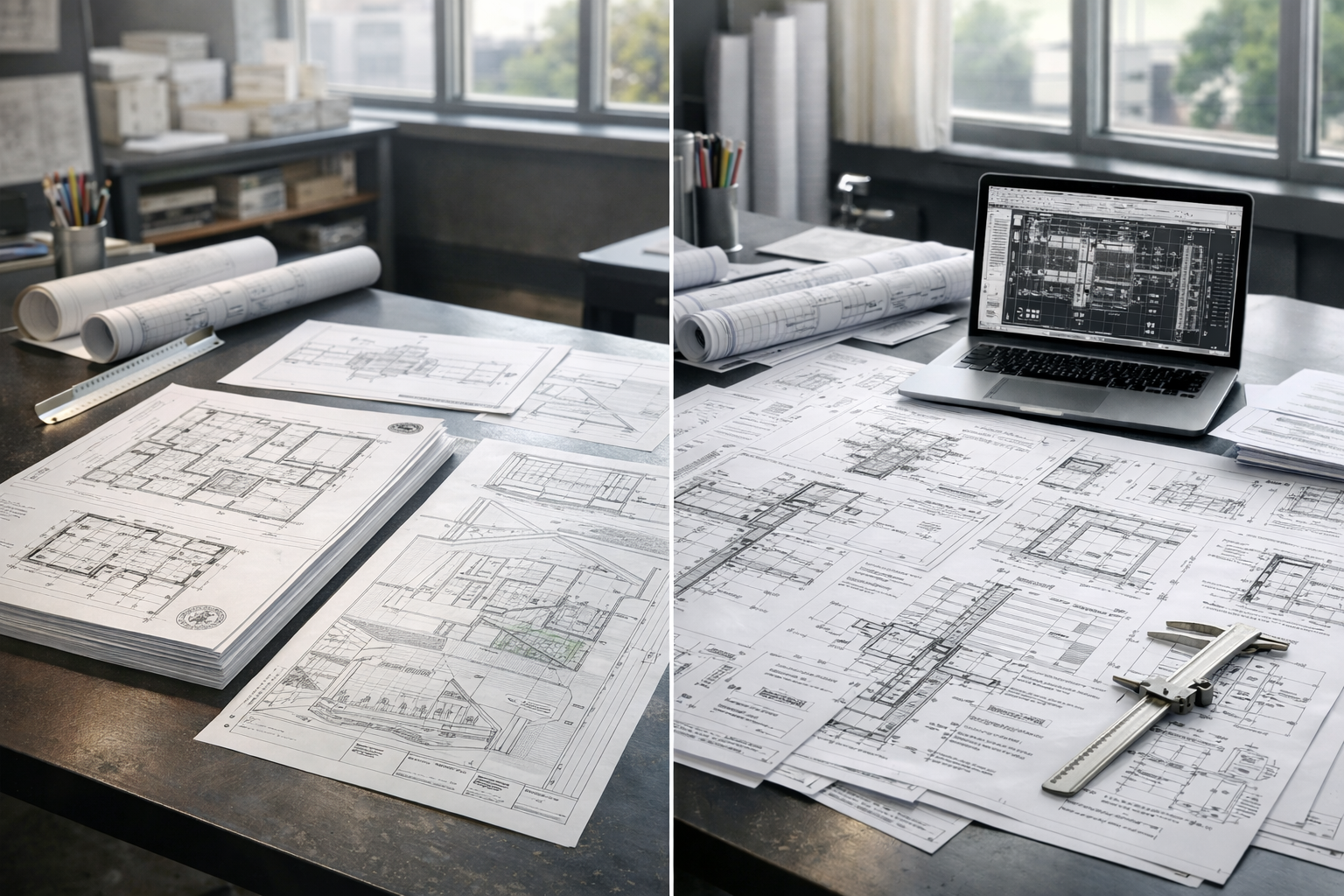
Many property owners underestimate the importance of construction documentation. However, strong documentation often determines whether a project runs smoothly or encounters major challenges.
Faster Permit Approvals
Complete and well-coordinated construction documents help municipal reviewers approve projects faster. Missing information often triggers additional review cycles that delay permits.
Accurate Contractor Pricing
Contractors rely on construction documents to estimate labor, materials, and equipment costs. Detailed documentation leads to more accurate bids and fewer surprises during construction.
Preventing Field Conflicts
Coordinated drawings help prevent conflicts between building systems. For example, proper documentation ensures that ductwork does not interfere with structural beams or plumbing lines.
Reducing Change Orders
Change orders—modifications to the construction contract—are one of the main causes of budget overruns. Thorough documentation reduces ambiguity and helps minimize these costly adjustments.
Common Mistakes in Construction Documentation
Even experienced teams sometimes encounter problems during the documentation phase. Some of the most common issues include:
Incomplete structural analysis, which may require redesign during construction
Under-detailed drawings, forcing contractors to make assumptions
Poor consultant coordination, leading to system conflicts
Missing code compliance information, delaying permits
Rushed permit submissions, which often trigger multiple revisions
Avoiding these mistakes requires careful coordination and thorough review before documents are issued.
Do All Projects Require Full Construction Documents?
The level of documentation required depends on the scope of the project and local municipal requirements.
Different project types typically require different levels of documentation:
Custom homes usually require full architectural and structural documentation.
Residential additions typically require structural drawings and updated floor plans.
Interior renovations may require partial documentation depending on the changes involved.
Commercial tenant fit-outs usually require mechanical, electrical, and plumbing documentation.
Structural modifications almost always require engineering drawings.
Local regulations vary, but larger or more complex projects almost always require a complete construction document set.
Frequently Asked Questions
What are architectural construction documents?
Architectural construction documents are detailed drawings, specifications, and technical instructions that describe how a building should be constructed. They serve as the primary communication tool between architects, engineers, contractors, and building officials throughout the construction process.
These documents typically include architectural floor plans, elevations, sections, structural engineering drawings, and building systems documentation such as mechanical, electrical, and plumbing layouts. They may also contain material specifications, dimensions, construction details, and notes that clarify how different components of the building should be installed.
Construction documents provide contractors with the information they need to build the project accurately while ensuring the design meets applicable building codes and safety standards. They also help coordinate the work of different trades involved in construction, reducing the risk of conflicts or errors during the building process.
Are construction documents required for permits?
Yes. Most municipalities require construction documents before issuing building permits so that local authorities can verify compliance with zoning regulations, building codes, and safety requirements. These documents allow building departments to review the proposed project and ensure that it meets structural, fire safety, accessibility, and energy efficiency standards.
During the permitting process, reviewers examine the submitted drawings and specifications to confirm that the design follows local codes and engineering requirements. If any issues are identified, the applicant may be asked to revise or clarify the documents before approval is granted.
Because building regulations vary by location, the exact documentation required may differ depending on the size and complexity of the project. However, detailed construction documents are almost always necessary for new construction, major renovations, and structural modifications.
Who prepares construction documents in architecture?
Construction documents are usually prepared by a team that includes licensed architects, structural engineers, mechanical engineers, electrical engineers, and plumbing engineers.
Structural engineers contribute structural calculations and framing plans that ensure the building can safely support loads and meet engineering standards. Mechanical, electrical, and plumbing engineers prepare drawings for the building’s systems, including HVAC equipment, electrical distribution, lighting, plumbing, and drainage.
Depending on the project, additional specialists such as civil engineers, landscape architects, fire protection engineers, and energy consultants may also participate in the documentation process. This collaborative approach ensures that every aspect of the building—from structure to mechanical systems—is carefully planned before construction begins.
Final Thoughts
Now that you understand what are construction documents, it’s clear why they form the foundation of every successful building project. These documents transform design concepts into detailed instructions that guide contractors, engineers, and inspectors from the permitting stage through final construction.
Well-prepared construction documents help projects move forward with fewer delays, clearer pricing, and fewer surprises on the job site. They protect the owner’s investment, ensure regulatory compliance, and help bring architectural visions to life.
If you found this guide helpful, consider sharing it with a colleague, homeowner, or builder who may benefit from understanding how construction documentation works.
