Architect vs Civil Engineer
If you're planning a construction project, renovation, or land development, one question often causes confusion early in the process: Do I need an architect or a civil engineer?
The confusion is understandable. Both architects and civil engineers play major roles in the built environment, and their work frequently overlaps during development projects. However, their responsibilities focus on very different aspects of the project.
Understanding the architect vs civil engineer distinction is essential for homeowners, developers, and property investors who want to avoid costly delays, permit issues, or coordination problems.
This discussion is not about careers or education paths—it’s about projects and responsibilities.
In simple terms:
Architects design the building itself.
Civil engineers design the land and infrastructure that support the building.
One professional focuses on the structure people occupy, while the other focuses on the systems that allow that structure to function safely within its environment.
Successful construction projects typically require both.
The Core Difference: Building Design vs Site Engineering
The fundamental difference between architect and civil engineer roles comes down to what part of the project they design.
Architects concentrate on the building: its layout, appearance, spatial flow, and compliance with building codes.
Civil engineers focus on the site: the land the building sits on, the drainage systems that manage water, the utilities that connect the building to infrastructure, and the roads that provide access.
To simplify the relationship:
Architect = the building
Civil engineer = the land and infrastructure
While this distinction seems straightforward, the reality is more interconnected. Site conditions often influence the building design, and architectural decisions can affect drainage, grading, and utility layouts.
Civil engineering disciplines fall within the broader field of Civil Engineering, which includes infrastructure planning, environmental systems, and land development.
Architecture, meanwhile, is guided by professional standards from organizations such as the American Institute of Architects and building regulations developed by the International Code Council .
Together, these disciplines shape how buildings interact with their surroundings.
What an Architect Is Responsible For
An architect is responsible for designing the building itself—from the overall concept to the final construction drawings.
Architects consider how people use spaces, how light enters a room, how the building relates to its surroundings, and how all of these elements come together into a cohesive design.
Architectural responsibilities typically include:
Space planning and layout design
Building form and aesthetics
Building code compliance
Accessibility and life-safety regulations
Construction document preparation
Coordination with engineering consultants
Client representation during design
Submission of building permit drawings
Architects also coordinate with various consultants—including structural engineers, mechanical engineers, and civil engineers—to ensure that all building systems work together.
For many projects, architects act as the central design coordinator, ensuring that the building design remains consistent throughout the process.
Typical architectural construction documents include:
Floor plans
Building elevations
Sections and details
Material specifications
Construction drawings for permits
These documents guide contractors during construction and ensure the building complies with local regulations.
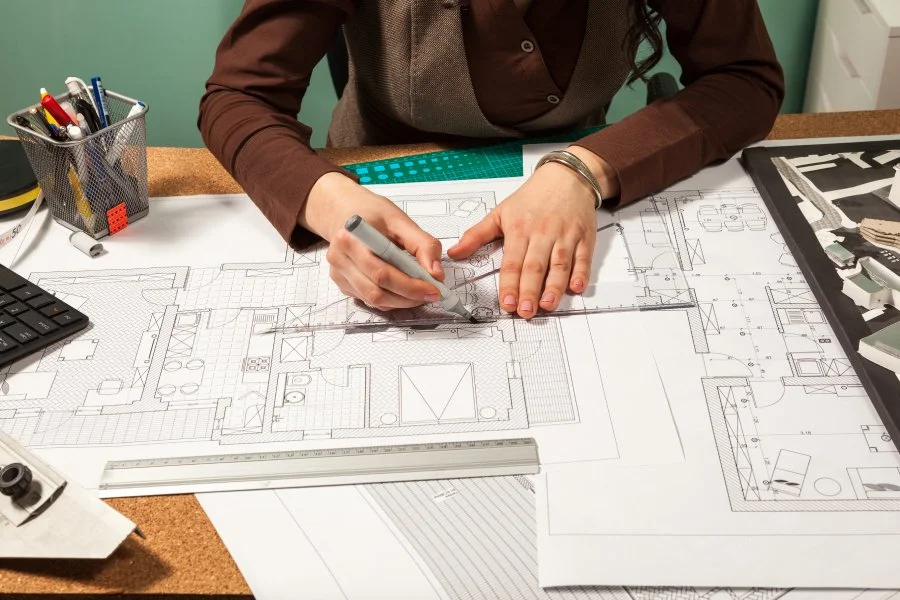
What a Civil Engineer Is Responsible For
Civil engineers focus on the land development and infrastructure systems that support the building.
Their work ensures that the site can safely accommodate the proposed building and that water, utilities, and access systems function properly.
Civil engineering responsibilities commonly include:
Site grading and earthwork design
Stormwater and drainage management
Utility design and connections
Road access and driveway layouts
Site infrastructure planning
Floodplain analysis
Zoning and land development compliance
Site permit submissions
Civil engineers design systems that control how water flows across the property. Poor drainage design can cause flooding, erosion, or foundation damage, which is why stormwater engineering is a critical part of site development.
Many civil engineering projects follow environmental guidelines developed by organizations such as the American Society of Civil Engineers.
Civil engineering scope often expands depending on site complexity. Flat suburban lots may require minimal grading work, while sloped sites, flood-prone areas, or dense urban developments can require extensive engineering analysis.

When You Only Need an Architect
Some projects primarily affect the interior or layout of a building and do not require changes to the surrounding land.
In these cases, civil engineering work may not be necessary.
Projects that often require only an architect include:
Interior renovations
Tenant fit-outs in existing buildings
Cosmetic remodeling
Small building additions on stable lots
Adaptive reuse projects that do not modify site infrastructure
In these situations, the building footprint remains largely unchanged and no major grading or drainage modifications are required.
Because the site conditions remain the same, civil engineering services are usually unnecessary. These types of projects are typically handled entirely by experienced architecture firm who focus on building design, space planning, and code compliance.
When You Only Need a Civil Engineer
In some cases, a project focuses on land development or infrastructure rather than the building itself.
These projects may require civil engineering expertise without architectural design.
Examples include:
Site subdivision projects
Utility system redesign
Drainage corrections
Roadway or infrastructure improvements
Land development planning without building construction
Civil engineers handle grading plans, stormwater systems, and infrastructure coordination needed for these developments.
When You Need Both
In many developments, coordination between architects and civil engineers begins early in the design process. The architect develops the building layout, floor plans, and exterior design, while the civil engineer evaluates site conditions such as soil stability, drainage patterns, access roads, and utility connections. This early collaboration helps prevent design conflicts and ensures the building can be constructed safely on the chosen site.
For example, if a building footprint changes during design, the civil engineer may need to revise grading plans, stormwater calculations, or utility layouts to accommodate the new structure. Similarly, site constraints such as flood zones, steep slopes, or zoning setbacks may influence how the architect designs the building.
Working together also helps streamline the permitting process. Many municipalities require separate drawings for building design and site engineering, and each set of documents must often be prepared or reviewed by licensed professionals in their respective fields.
Ultimately, projects that involve both disciplines tend to move more efficiently from design to construction. Clear coordination between architects and civil engineers reduces delays, minimizes redesigns, and helps ensure the finished project meets both structural and environmental requirements.
How Architects and Civil Engineers Work Together
Architects and civil engineers collaborate throughout the project lifecycle.
This collaboration often begins with site feasibility studies, where engineers evaluate grading conditions, drainage requirements, and infrastructure availability.
Civil engineering analysis may influence building placement on the site. For example, drainage patterns or soil conditions may determine where a building can safely sit.
Architectural design decisions also affect civil engineering work. Roof layouts and building footprints influence how stormwater must be managed on the site.
Key collaboration areas include:
Early site feasibility review
Building placement and orientation
Utility routing coordination
Drainage system design
Grading adjustments to support foundations
Permit submission sequencing
This coordination reduces design conflicts and improves project efficiency.
Who Leads the Project?
For most building projects, the architect typically leads the design process.
Because the architect is responsible for the overall building concept and construction documentation, they often coordinate the work of consultants such as civil engineers, structural engineers, and mechanical engineers.
Centralized leadership helps maintain consistency throughout the project.
Without clear coordination, conflicting drawings or design decisions can create delays during permitting or construction.
By organizing consultant work under a unified design team, architects help reduce risk and maintain alignment across all disciplines.
Architectural Engineer vs Civil Engineer
Architectural engineers work closely with architects and other specialists to ensure that a building’s internal systems operate efficiently and safely. Their work often includes structural analysis, HVAC coordination, electrical systems integration, and building performance optimization. Because of this systems-focused approach, architectural engineers are heavily involved in the technical side of building design and construction.
Civil engineers typically work at a broader project scale. Their responsibilities often include designing transportation networks, stormwater drainage systems, grading plans, and utility infrastructure that supports buildings and communities. On building projects, civil engineers ensure that the site can properly support the structure, manage water runoff, and connect to public infrastructure.
Although the two professions share some overlapping knowledge in construction and engineering principles, their primary responsibilities differ significantly. Architectural engineering focuses on the performance and integration of systems within a building, while civil engineering addresses the external infrastructure and environmental conditions surrounding it.
In many large developments, both architectural engineers and civil engineers collaborate with architects, structural engineers, and contractors to deliver a coordinated project. This teamwork helps ensure that the building itself functions properly while the surrounding infrastructure supports long-term safety, durability, and sustainability.

Common Misconceptions
In many projects, architects and civil engineers collaborate rather than compete. While architects focus on spatial design, usability, and the overall appearance of a building, civil engineers concentrate on infrastructure, site conditions, and structural performance. Both disciplines contribute essential expertise that ensures a project is safe, functional, and compliant with building regulations.
Another common misunderstanding is that hiring only one professional will reduce costs. In reality, attempting to replace one discipline with the other can lead to incomplete designs, delays during the permitting process, or costly revisions later in construction. Building departments often require specific drawings prepared and stamped by licensed professionals, meaning the correct specialist must be involved at the right stage of the project.
For example, architects typically prepare floor plans, elevations, and building layouts, while civil engineers design grading plans, stormwater management systems, roadways, and site infrastructure. When both professionals collaborate, the result is a well-coordinated project where the building design and the surrounding site function together effectively.
Understanding these distinctions helps property owners, developers, and homeowners avoid confusion and ensure they assemble the right team for their construction project.
Final Decision Guide: Who Should You Contact First?
Choosing who to contact first depends on the nature of your project. If your project focuses primarily on building design, start with an architect. If the project involves land development or infrastructure planning, start with a civil engineer.
If you're unsure where to begin, contacting an architect is often the best first step. Architects frequently coordinate feasibility studies and can bring civil engineers onto the project team when site engineering becomes necessary.
Understanding the difference between architect and civil engineer roles helps streamline planning and reduces the risk of design conflicts.
Successful projects rarely rely on just one discipline. Instead, they combine architectural design with engineering expertise to create buildings that are functional, safe, and well integrated into their environment.
If you found this guide helpful, consider sharing it or exploring related resources on building design and development planning.
