How to Add a Second Floor to a House
Adding a second story can double your living space without expanding your footprint - but it’s one of the most structurally complex renovations a homeowner can attempt. If you’re researching how to add a second floor to a house, the real questions aren’t just about design. They’re about structural capacity, zoning compliance, construction sequencing, and cost risk.
This guide breaks down what professionals evaluate before recommending adding a second floor to a house, with practical insight into engineering, permitting, and the real cost of adding a second floor to a house - especially in high-regulation states like New Jersey.
1. Can Your Home Structurally Support a Second Floor?
Before drawings are created, before budgets are discussed, and before anyone starts collecting inspiration photos for design ideas, the most important question is whether the house can physically support the added structural load of another story.
The very first step in evaluating a vertical home addition is determining structural feasibility through careful analysis of how the existing structure carries weight.
Load-Bearing Wall Alignment
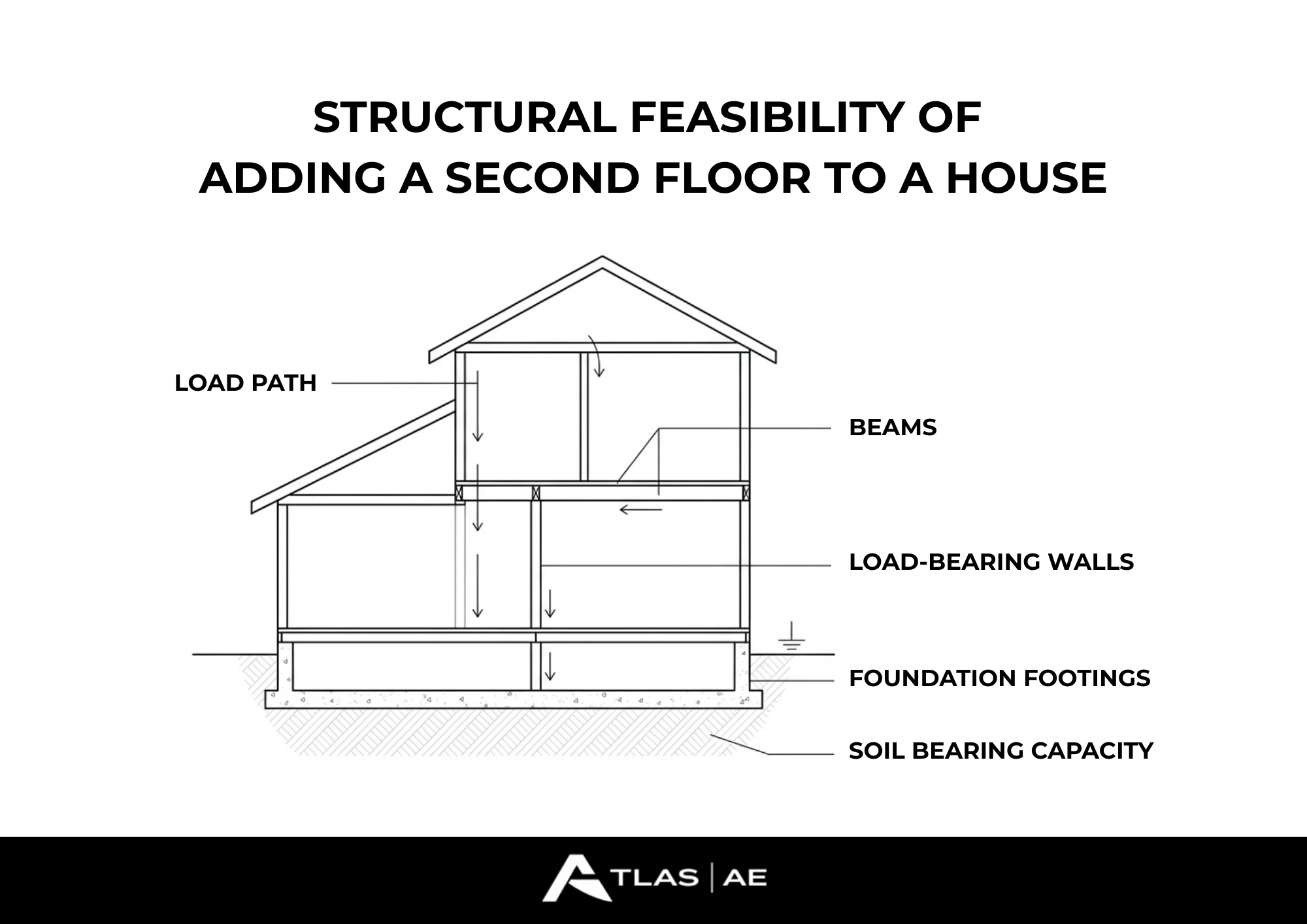
When adding a second story, the structural load from the new level must transfer cleanly and continuously through the framing system and down to the foundation below so that weight is distributed safely and efficiently.
If the walls on the new upper level do not align with the existing load-bearing walls or structural paths below, engineers must introduce beams, columns, or structural framing systems to redirect the load safely to the foundation.
Misaligned bearing walls are one of the most common structural challenges encountered in vertical home additions and often require additional engineering solutions to resolve properly.
Foundation Width and Depth
The existing foundation must be capable of supporting the additional structural load created by the second floor without experiencing settlement, cracking, or long-term structural stress.
To determine whether the foundation can support the increased load, engineers typically evaluate several key structural conditions, including:
Footing width
Footing depth
Concrete integrity
Existing cracks or settlement
Reinforcement presence
Homes without adequate spread footings may require underpinning or foundation widening — which can significantly affect budget.
Masonry vs. Wood Frame Considerations
Wood-frame homes are generally easier to modify structurally because their framing systems allow engineers and contractors to adjust or reinforce structural components with relative flexibility.
Masonry or brick homes require careful structural tie-ins between the existing structure and the new construction and sometimes require the addition of steel reinforcement to safely transfer loads.
Masonry construction often increases both engineering demands and demolition complexity, since modifying brick or block structures requires more precise structural integration.
Slab vs. Basement Foundations
Homes with full basements typically provide better structural adaptability because the foundation walls and footings are often deeper and designed to carry greater loads.
Crawl spaces can vary widely in their structural capacity depending on how the footings and foundation walls were originally constructed.
Slab-on-grade foundations often require more detailed structural review before adding a second level because the slab and footings may not have been designed for vertical expansion.
Slabs are not automatically disqualified from supporting a second story, but structural reinforcement or additional engineering solutions are commonly required.
Soil Conditions
Even if the foundation itself is structurally strong, poor soil conditions beneath the home can lead to settlement or structural instability once additional weight is introduced.
In certain municipalities or in homes where previous settlement has occurred, a geotechnical review may be required to confirm that soil conditions can safely support the added load.
When Reinforcement Is Required
When the existing structure cannot safely support the additional weight of a second story, engineers typically recommend reinforcement strategies that strengthen key structural components.
Common reinforcement strategies include:
Sistering LVLs to joists
Installing steel moment frames
Adding shear walls
Foundation underpinning
Replacing undersized ceiling joists
Many older New Jersey homes—particularly Cape Cod and split-level designs built under historic construction standards—require significant structural review because framing members were often undersized compared to modern building codes.
This stage of structural evaluation is where professional feasibility studies become most valuable because they identify potential risks before major design or construction decisions are made.
2. Zoning and Height Restrictions You Must Check First
Structural feasibility means nothing if local zoning regulations ultimately prevent the project from being approved or legally constructed.
Before adding a second story to a house, it is essential to confirm several key zoning regulations that may affect whether the project is permitted at all.
Local Height Limits
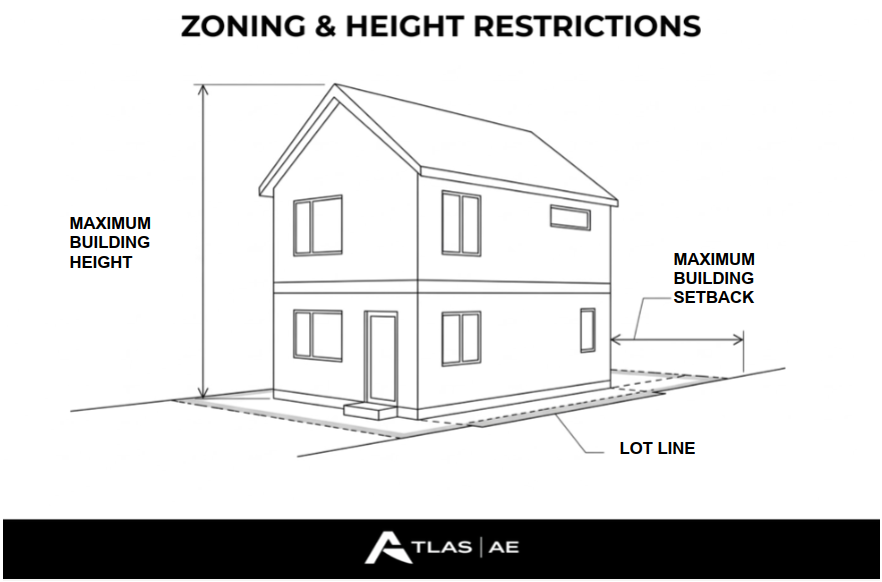
Municipal building codes often restrict the total allowable building height, typically measured from the finished grade level at the base of the home up to the highest point of the roof ridge.
Floor Area Ratio (FAR)
Floor Area Ratio (FAR) regulations limit the total allowable square footage of a home relative to the size of the lot on which it sits, effectively controlling how large a building can be compared to the property area.
Exceeding the permitted FAR can trigger the need for a zoning variance, which requires formal approval from local zoning boards and may involve public hearings and additional review.
Lot Coverage Limits
Your property may already be at or very close to the maximum allowable lot coverage permitted under local zoning regulations, which can restrict your ability to expand the home in ways that increase the building’s footprint.
This limitation can affect expansion strategies and may require careful design adjustments if additional floor area is being considered.
Setbacks
Even vertical additions that do not directly expand the ground-level footprint can sometimes trigger setback reviews if modifications to the roofline change the perceived building envelope or extend portions of the structure outward.
Historic District Restrictions
Homes located within designated historic districts or under historic preservation overlays may require additional architectural review to ensure that new construction respects historic character, approved materials, and neighborhood design standards.
Variances
If your project exceeds established zoning limits such as height restrictions, FAR limits, or setback requirements, you may need to apply for a zoning variance to obtain permission to proceed.
This process typically adds both time and uncertainty to the project timeline because approval depends on municipal review boards and public planning procedures.
NJ authority insert:
Many New Jersey towns enforce particularly strict bulk zoning regulations, including height limits, lot coverage rules, and historic overlay reviews that can significantly influence design options.
Coastal municipalities in New Jersey often impose additional height restrictions, floodplain regulations, and environmental requirements that must be addressed during project planning.
Zoning due diligence should always occur before architectural design begins so that design work is based on realistic regulatory constraints rather than assumptions.
3. Full Second Story vs Partial vs Pop-Top
Professionals evaluating a vertical home addition rarely just list possible options; instead, they analyze each approach strategically to determine which solution delivers the best structural efficiency, construction feasibility, and long-term value.
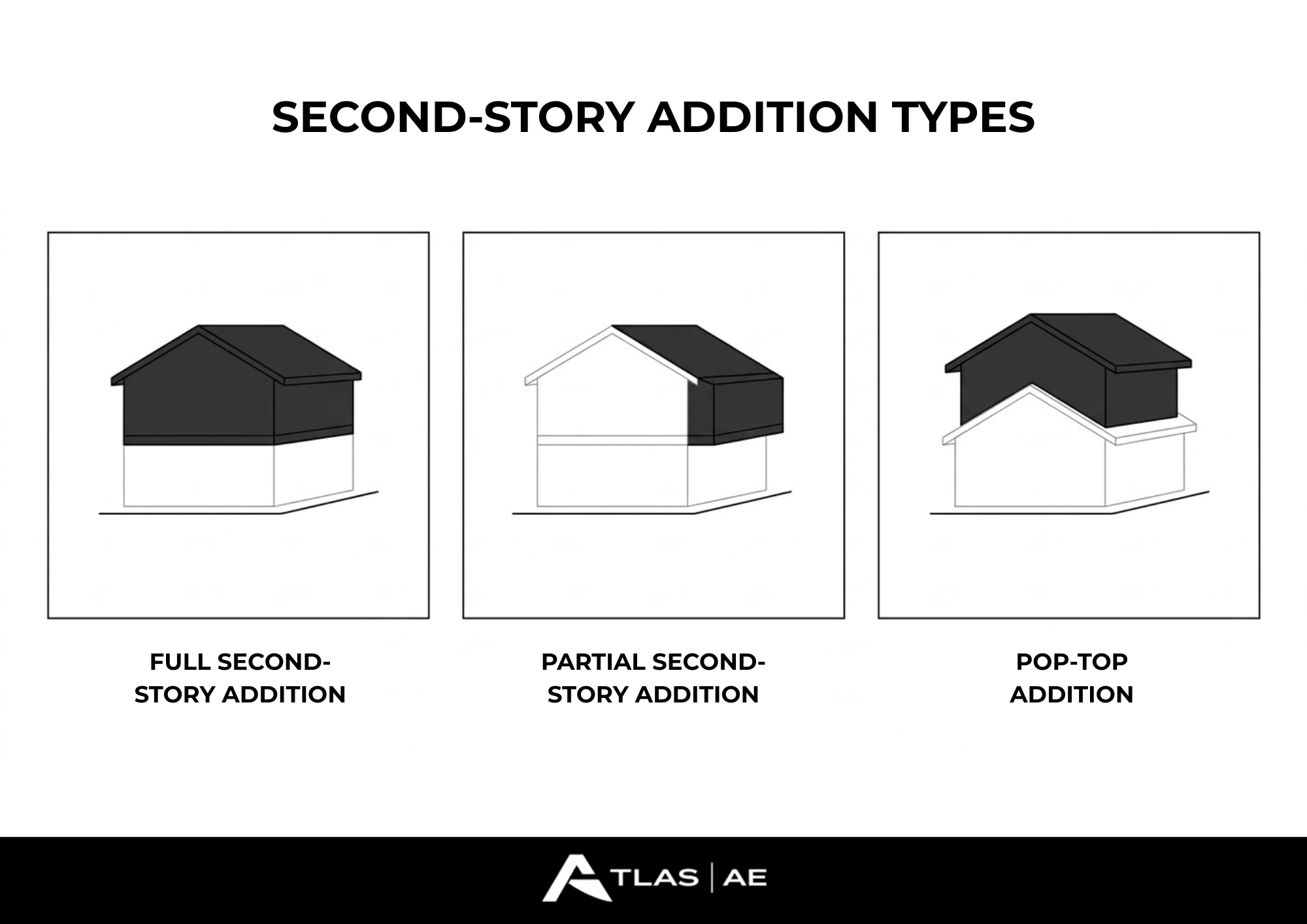
Full Second Story
A full second story is typically the most structurally efficient option when the load paths of the new upper walls align directly with the load-bearing structure below, allowing weight to transfer cleanly through the framing system to the foundation.
This approach generally requires complete removal of the existing roof structure so that new framing can be installed to support the additional level.
Major mechanical systems, including HVAC ductwork, plumbing stacks, and electrical routing, often need to be relocated or expanded to accommodate the new floor.
Because of the structural modifications, system upgrades, and extensive construction scope involved, a full second story usually represents the largest overall cost impact of the available options.
However, it also provides the maximum possible square footage gain since the entire footprint of the house can potentially be expanded vertically.
Partial Second Story
A partial second-story addition is typically constructed over a specific section of the house - often above a garage or a limited portion of the existing footprint - rather than across the entire structure.
Because the new construction covers only part of the building, the structural load added to the existing home is usually lower than that of a full second-story addition.
This approach is generally less disruptive to the home during construction because only part of the roof and structure must be modified.
However, tying a partial addition into the existing roof system can sometimes require complex roof transitions to maintain proper drainage, structural continuity, and architectural consistency.
Partial additions can sometimes provide better cost-to-value ratios because they deliver meaningful additional living space without requiring the extensive structural reconstruction associated with a full second story.
Pop-Top / Roof Raise
A pop-top or roof-raise approach increases the height of the existing roof structure without significantly expanding the building’s footprint.
This strategy is often used to convert low attic spaces into usable living areas such as bedrooms, offices, or bonus rooms.
The feasibility of a roof raise depends heavily on the existing roof pitch, available ceiling height, and structural framing configuration.
Key Professional Evaluations
Architects and design professionals typically evaluate several critical factors before recommending which vertical addition strategy makes the most sense for a particular home.
Structural efficiency of the proposed design and how effectively loads will transfer through the existing structure.
The complexity and implications of removing and rebuilding the roof structure.
The extent to which HVAC systems, plumbing lines, and other mechanical infrastructure must be relocated or expanded.
The challenges associated with integrating a staircase that provides proper access while maintaining functional floor plan circulation.
The overall cost per usable square foot once structural, mechanical, and finishing work are fully accounted for.
The staircase alone can significantly influence the layout of the first floor, often requiring redesign of existing rooms or circulation paths to accommodate the new vertical connection.
4. The Real Cost of Adding a Second Floor
Understanding the real cost of adding a second floor requires breaking the project into its major construction components rather than relying on vague averages.
Major cost factors typically include:
Structural Reinforcement – $20,000–$100,000+ depending on foundation capacity and required framing upgrades.
Demolition & Roof Removal – Removing the existing roof, debris disposal, and temporary weather protection.
New Framing & Roofing – One of the largest labor costs due to extensive structural carpentry.
MEP Expansion (Mechanical, Electrical, Plumbing) – HVAC upgrades, electrical panel capacity increases, and plumbing stack extensions for new fixtures.
Staircase Insertion – Typically $20,000–$40,000+ depending on layout changes and finish level.
Design & Engineering Fees – Usually 8–15% of total construction cost.
Permits & Inspections – Varies significantly by municipality and local building regulations.
Temporary Relocation – Often required during roof removal and structural work.
Contingency Budget – 15–25% recommended to cover unforeseen structural or construction issues.
Typical price ranges:
National average: $200–$450+ per square foot
New Jersey range: $250–$500+ per square foot in higher-cost municipalities
Costs can vary based on:
Structural retrofits required
Interior finish level
Local permitting requirements
Mechanical system upgrades
Roof design complexity
Labor market conditions
Understanding these variables is more useful than focusing only on average price ranges.
5. Construction Phasing: What Actually Happens
Adding a second floor is not a cosmetic renovation or a simple interior upgrade; it is a major structural transformation that fundamentally alters how the house is built and how loads move through the structure.
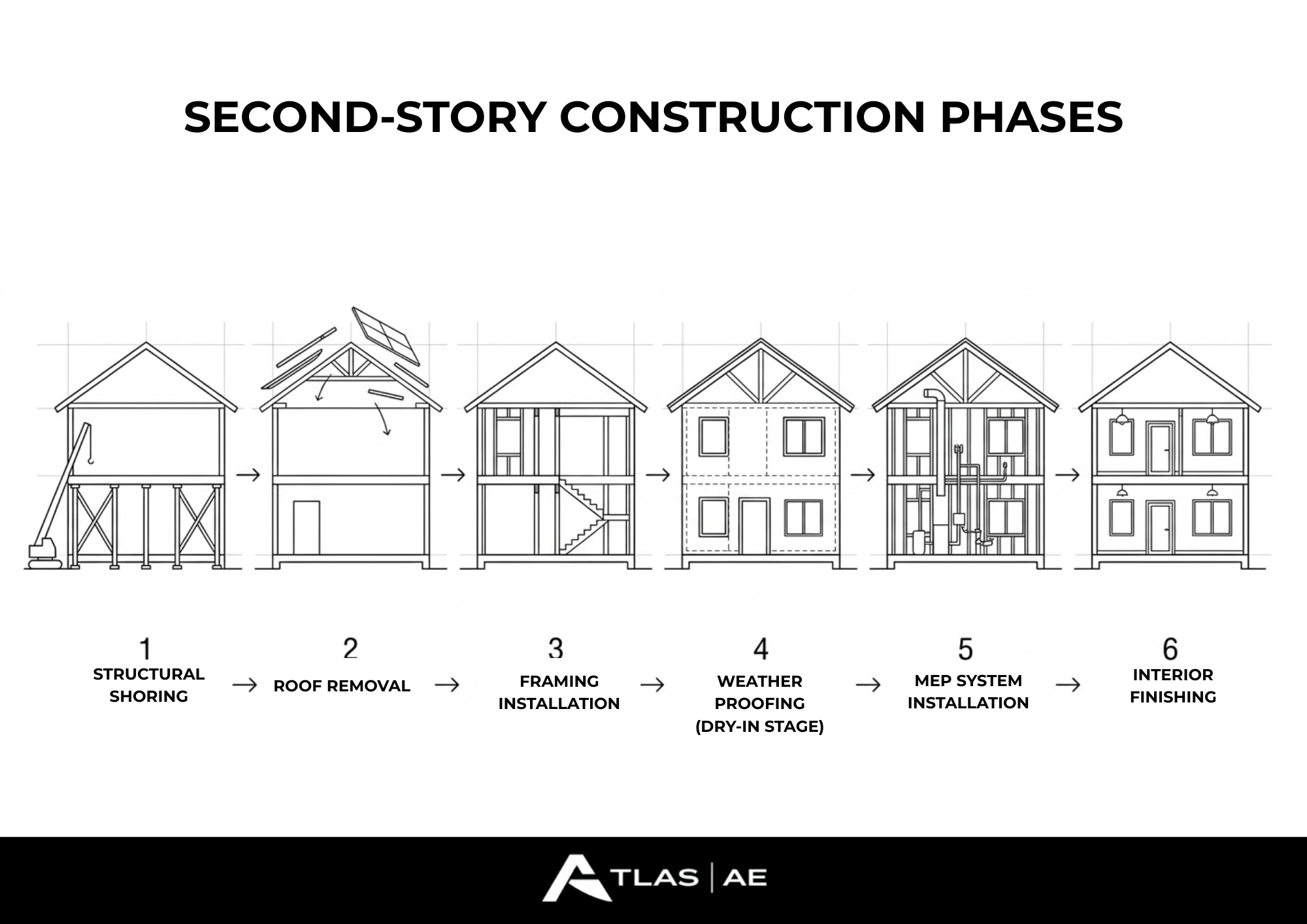
Temporary shoring of the lower level is installed first so that the existing structure is properly supported while portions of the roof and framing are removed during construction.
Roof removal follows, which involves dismantling the existing roofing materials and structural roof framing to prepare the building for the new second-story construction.
Structural reinforcement is then completed, strengthening the existing framing, load-bearing walls, and foundation connections so the structure can safely carry the additional weight of the new level.
Weatherproofing, often called the “dry-in” stage, occurs once the new structural framing and roof sheathing are installed so that the house can be protected from rain, wind, and weather exposure.
Extension of mechanical systems such as HVAC ductwork, plumbing lines, and electrical wiring is completed so that the new floor can function as a fully integrated part of the home.
Framing inspections are conducted by municipal building officials to verify that structural work complies with approved plans and local building codes.
Insulation and drywall installation begins after inspections are passed, enclosing the interior structure and preparing the new level for finished construction.
Interior finishes, including flooring, trim work, painting, fixtures, and final system installations, complete the transformation of the new second floor into usable living space.
This entire process requires careful coordination between architects, engineers, contractors, and inspectors to ensure that each phase is executed safely, efficiently, and in the correct sequence.
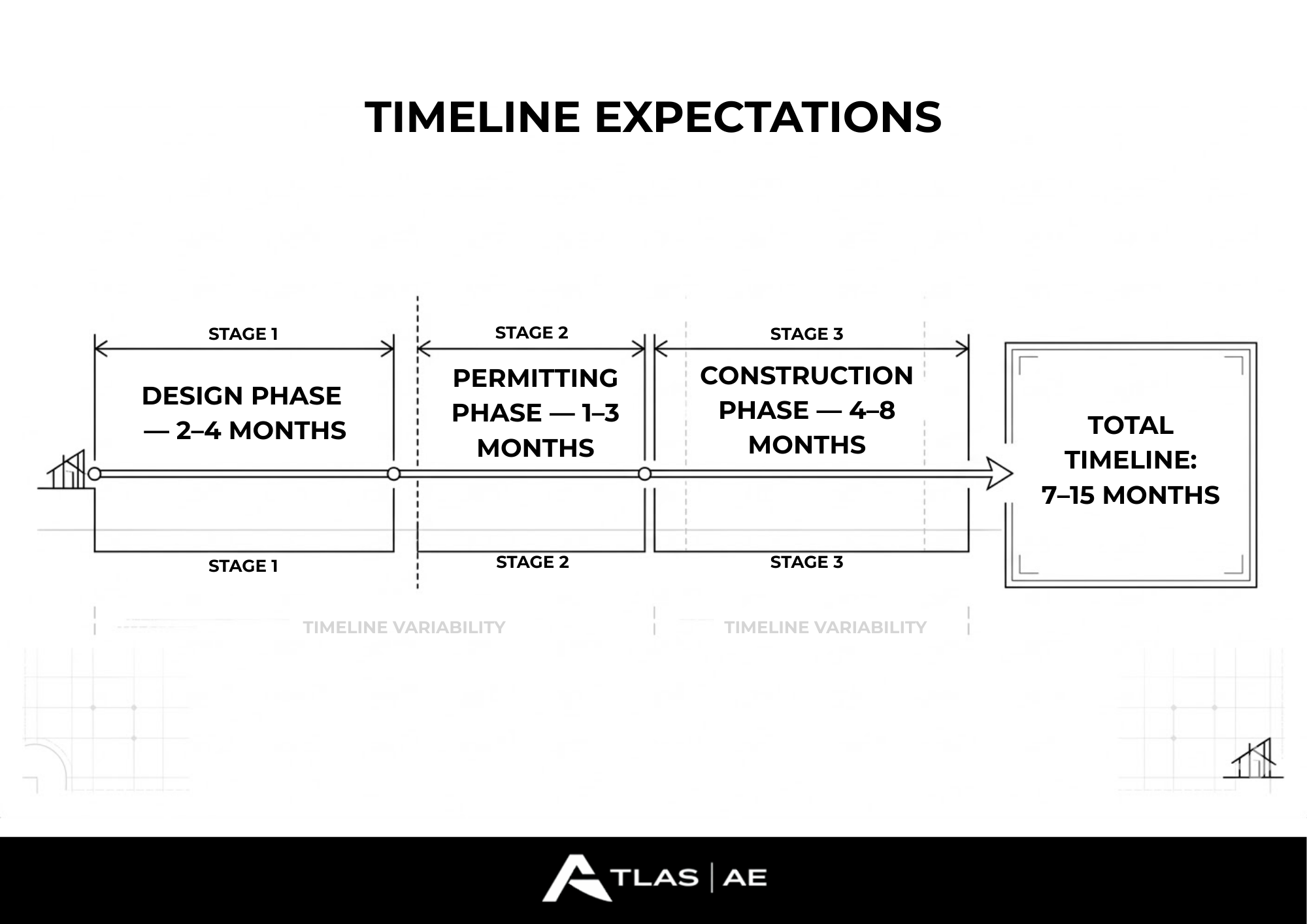
6. Timeline Expectations
Design Phase
The design phase typically takes 2–4 months and includes the structural feasibility evaluation, early planning discussions, and the development of architectural drawings that define the scope of the second-floor addition.
During this period, architects refine the layout, coordinate with a structural engineering firm, and prepare the documentation necessary to move forward with permit submissions.
Permitting
The permitting phase generally requires 1–3 months at minimum, depending on the complexity of the project and the responsiveness of the local building department.
In municipalities with stricter zoning enforcement, historic review boards, or heavier permit backlogs, this review period can take considerably longer than the minimum estimate.
Construction
Once permits are approved and construction begins, the building phase itself typically takes 3–8 months, although the exact duration depends on the scale of the addition, structural complexity, contractor scheduling, and weather conditions.
NJ note: Permit timelines in New Jersey can vary significantly from township to township, and in some municipalities the review process can extend well beyond typical expectations due to zoning scrutiny or administrative backlog.
Because of these variables, homeowners should realistically expect a total project duration of approximately 4–12 months, including early planning, design work, permitting, and construction.
7. When You Should NOT Add a Second Floor
This is the point in the decision-making process where honest, practical advice becomes especially important because not every home is a good candidate for a vertical addition.
You should seriously reconsider adding a second story if several structural, financial, or functional limitations begin to outweigh the potential benefits of the project.
Foundation retrofit costs exceed structural value
First-floor ceiling heights are already low
Stair placement compromises floor plan functionality
Zoning prevents adequate finished height
Comparable resale values don’t support the investment,
A horizontal addition is more cost-efficient
You need immediate space without disruption
Sometimes building upward simply isn’t the smartest move, and exploring alternative expansion strategies may produce a better financial and functional outcome.
8. How Architects Reduce Risk in Major Vertical Additions
Experienced New Jersey architects reduce risk in second-story additions by evaluating structural limits, zoning constraints, and construction costs before design decisions are finalized.
Key strategies professionals use include:
Feasibility Studies – Early structural and zoning evaluations to determine whether the home can support a second-story addition.
Structural Consultation – Involving engineers early to verify load paths, framing capacity, and foundation strength.
Zoning Analysis – Reviewing height limits, FAR, and local regulations before submitting permit applications.
Cost Modeling – Developing realistic budgets with contingency allowances for structural and construction variables.
Phased Planning – Sequencing construction stages to improve efficiency and reduce disruption.
Design Integration Strategy – Ensuring the new second floor blends structurally and visually with the existing home.
Most costly problems in vertical additions occur when this early analysis is skipped or rushed.
Conclusion
Understanding how to add a second floor to a house means recognizing that this type of project is far more complex than a typical renovation. A second-story addition is essentially a structural redevelopment that requires careful evaluation before design work even begins.
Before moving forward, homeowners must confirm that the existing structure can support the additional load, verify zoning compliance, estimate realistic construction costs, and understand the level of disruption the project will create during construction.
When engineered properly and planned around local market conditions, adding a second story can significantly increase usable living space and long-term property value. But when projects move forward without proper feasibility analysis, they often introduce structural risks, regulatory issues, and unnecessary costs.
If you are researching how to add a second floor to a house, the most important first step is not floor plans or design inspiration — it is a professional feasibility study that evaluates structural capacity, zoning limits, and real construction costs.
